 VapeWholesaleHub
Anise Ice Staff Training Notes for Store Teams — Low Minimum Quantities
Buyers often ask us to explain why two anise ice samples that look identical behave differently after a month. The answer is almost always tolerance control, and it is more interesting than it sounds.
Reading a Anise Ice Spec Sheet
Two specifications that matter more than buyers expect: the seal integrity after a drop test and the consistency of the draw from first use to last. Both are measurable before you commit to volume.
A written anise ice specification should be short enough to read in a minute and precise enough to argue about. If a factory cannot confirm a number in writing, assume the number is whatever is cheapest that week.
| Product category | Accessory |
|---|---|
| Resistance band | 0.8 - 1.0 ohm |
| Capacity tolerance | +/- 5% |
| Puff count method | Machine cycle 3s on / 27s off |
| Master carton | 200 units |
| Carton weight | 11.8 kg |
| Shelf life | 12 months |
| Storage | 15-25 C, dry, away from direct light |
Positioning Anise Ice on Your Shelf
Think about where anise ice sits in your customer's week. If it is a weekly restock, breadth matters less than availability. If it is an occasional treat, flavour range and display story carry more weight.
Decide early whether anise ice is a traffic driver or a margin line in your store. The answer changes how you price it, where you place it and how hard you push it at the counter.
How Anise Ice Batches Are Checked
The defect rate that matters is the one your customer experiences, not the one the factory reports. Bridge that gap by inspecting the way a customer would open the box, not the way a line worker packs it.
- Confirm the current customs classification with your own broker.
- Rotate stock by batch code rather than by delivery date.
- Plan the switch from air to sea freight before you need it.
- Agree the tolerance band in writing before approving artwork.
- Ask how the factory measures puff count, then compare like with like.
Modelling a Healthy Margin
When you model anise ice pricing, build in a realistic shrink figure. Even a well run line loses a small percentage to damage, expiry and sampling. Pretending that number is zero is how a healthy looking margin turns negative.
Build anise ice price tiers around order sizes your customers actually place. Tiers that only make sense on a spreadsheet get ignored, and you end up discounting ad hoc instead.
Indicative reference points for planning purposes: entry tier from USD 2.04 per unit at 1000 units, mid tier at USD 1.86, and volume tier at USD 0.90 for full container quantities. These figures move with specification, packaging and freight, so treat them as a shape rather than a quote.
Selling Anise Ice at Store Level
Staff knowledge moves anise ice more than any fixture. A two minute explanation of the difference between this line and the one next to it converts a browsing shopper into a repeat buyer far more reliably than a discount.
Getting Anise Ice to Your Warehouse
Customs classification for anise ice varies by market and changes from time to time. We ship with full documentation, but your broker should confirm the current code before your first order rather than after it lands.
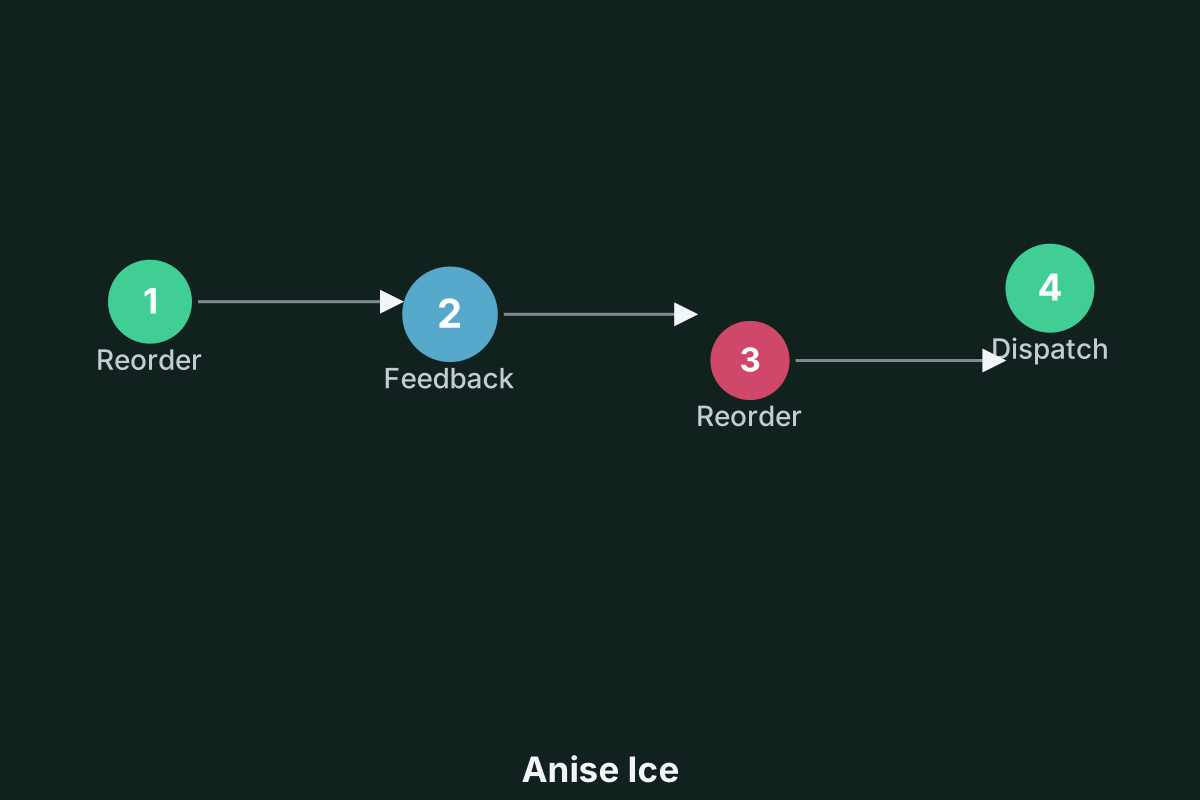
Practical Checklist
- Write the complaint threshold into the order terms.
- Keep sealed retained samples from every production batch.
- Start with a mixed carton and let your own sell-through decide.
- Confirm the current customs classification with your own broker.
- Plan the switch from air to sea freight before you need it.
- Agree the tolerance band in writing before approving artwork.
Frequently Asked Questions
Do you hold stock for regular customers?
For established programmes we can reserve production slots and, in some cases, hold finished anise ice stock against a forecast. It removes most of the lead time risk from a reorder and is worth discussing once volumes are stable.
What if I only need a small first order?
That is normal and sensible. A mixed carton lets you test anise ice in your own market before committing to a production run, and the specification you approve at that stage carries through to larger orders unchanged.
Can you match an existing product I already sell?
Often yes, provided we can measure it properly. Send a physical sample and we will report back on what can be matched, what will differ slightly, and why. An honest gap is more useful than a vague promise.
Is there support for in-store material?
Yes. Shelf talkers, counter cards and simple planogram suggestions are available for anise ice ranges that reach a sensible volume. Most retailers find the plain strength and flavour cards do the most work.
Next Step
Nobody wins when a first order is too large to learn from. Start with a mixed carton, check how it moves in your own market, then scale the lines that earned the shelf space.
Related Reading
- Anise Ice Staff Training Notes for Store Teams — First-Time Importers
- Anise Ice Handling, Labeling and Regulatory Paperwork — Convenience Retail
- Anise Ice Temperature Exposure During Transit — a Printable Checklist
- Where Anise Ice Fits in a Balanced Vape Assortment — the Buying Desk
- Anise Ice Warehouse Picking and Batch Rotation — Low Minimum Quantities
- How to Choose Anise Ice Without Overpaying — a Printable Checklist