 VapeWholesaleHub
Anise Ice Review Mining for Product Insight — Tight Margin Categories
If you are comparing anise ice suppliers right now, you are probably looking at three quotes that look identical and cost very different amounts. That gap usually comes down to cell grade, coil consistency and how honest the factory is about tolerances. Let us unpack it.
Positioning Anise Ice on Your Shelf
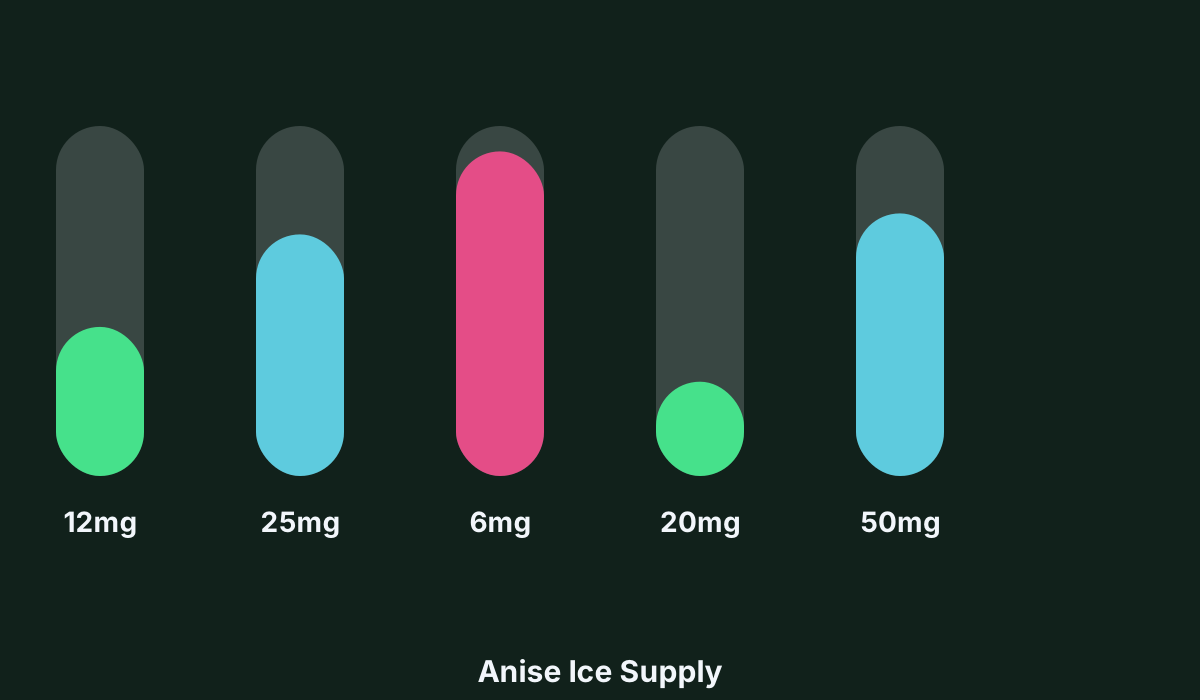
Before anything else, decide which customer you are buying anise ice for. A convenience counter with limited shelf depth needs a tight range that turns quickly, while a specialist shop can carry a deeper ladder of options and educate buyers into higher ticket lines.
Modelling a Healthy Margin
When you model anise ice pricing, build in a realistic shrink figure. Even a well run line loses a small percentage to damage, expiry and sampling. Pretending that number is zero is how a healthy looking margin turns negative.
Indicative reference points for planning purposes: entry tier from USD 1.64 per unit at 500 units, mid tier at USD 1.11, and volume tier at USD 0.98 for full container quantities. These figures move with specification, packaging and freight, so treat them as a shape rather than a quote.
Turning Anise Ice Into Repeats
Online, the listing for anise ice should answer three questions without scrolling: what it is, how strong it is, and what it tastes like. Everything else belongs further down the page.
How Anise Ice Batches Are Checked
Keep a photo record of every anise ice approval sample. Written descriptions age badly; a dated photograph next to a delivered unit settles most arguments in seconds.
- Ask how the factory measures puff count, then compare like with like.
- Agree the tolerance band in writing before approving artwork.
- Model landed cost, not ex-works price, when comparing quotes.
- Check carton dimensions against your freight quote before confirming.
- Keep sealed retained samples from every production batch.
The Specification That Matters
Where possible, tie part of the anise ice payment to inspection against the written spec. It focuses attention on the numbers rather than on the relationship.
| Product category | Open system |
|---|---|
| Resistance band | 0.6 - 0.8 ohm |
| Capacity tolerance | +/- 5% |
| Puff count method | Machine cycle 3s on / 27s off |
| Master carton | 100 units |
| Carton weight | 10.6 kg |
| Shelf life | 24 months |
| Storage | 15-25 C, dry, away from direct light |
Logistics That Protect Margin
Air freight makes sense for a first anise ice order when you need to test demand quickly, but almost every steady programme moves to sea freight once volumes stabilise. Planning that switch early avoids a painful margin squeeze later.
Carton dimensions for anise ice are a design decision, not a packing afterthought. A few centimetres on the master carton can change how many units fit a pallet, and that repeats on every order.

Practical Checklist
- Ask how the factory measures puff count, then compare like with like.
- Write the complaint threshold into the order terms.
- Check carton dimensions against your freight quote before confirming.
- Start with a mixed carton and let your own sell-through decide.
- Model landed cost, not ex-works price, when comparing quotes.
- Plan the switch from air to sea freight before you need it.
Frequently Asked Questions
What does a sample pack usually include?
A typical anise ice sample pack covers the strengths or variants you are most likely to list, packed so you can evaluate them side by side. Tell us which lines you are considering and we will match the pack to that rather than sending a generic selection.
What is the usual minimum order for anise ice?
For a standard production run the minimum is normally one master carton per flavour, though mixed cartons can be arranged for a first order. If you are testing the line, ask about a sample pack first and treat the freight as part of your research budget.
What if I only need a small first order?
That is normal and sensible. A mixed carton lets you test anise ice in your own market before committing to a production run, and the specification you approve at that stage carries through to larger orders unchanged.
What if a batch does not match the sample?
Keep the retained samples from the approval stage. If a delivered batch measurably differs, we compare against the retained set and resolve it against the production record. This is why we insist on sealed retained units from every run.
Can I visit the production facility?
Yes, and we encourage it for larger programmes. Visits are most useful when you already have a draft specification, because you can then check the specific processes behind the numbers you care about.
Next Step
Nobody wins when a first order is too large to learn from. Start with a mixed carton, check how it moves in your own market, then scale the lines that earned the shelf space.
Related Reading
- Anise Ice Returns Data and What It Is Telling You — UK and Ireland
- Anise Ice Insurance and Cargo Cover Explained — the Buying Desk
- Sustainability and Take Back Programmes for Anise Ice — EU Markets
- Anise Ice Market Demand: Reading the Numbers — the Middle East
- Anise Ice Customer Education That Reduces Complaints — a Factory Floor View
- Anise Ice Slow Moving Stock and Remedial Actions — 2026 Edition