 VapeWholesaleHub
Anise Ice Cash Flow Planning for Large Buys — Tight Margin Categories
Treat anise ice as a repeat purchase category rather than a one off buy. That single change in framing alters almost every decision downstream, from carton size to how many strengths you list.
Inspection Before Dispatch
Set the anise ice complaint threshold in the contract before you need it. Deciding what counts as an acceptable defect rate during a dispute is the worst possible time to negotiate it.
- Check carton dimensions against your freight quote before confirming.
- Start with a mixed carton and let your own sell-through decide.
- Plan the switch from air to sea freight before you need it.
- Write the complaint threshold into the order terms.
- Agree the tolerance band in writing before approving artwork.
Where Anise Ice Sits in the Range
A tight anise ice range with deep availability usually outsells a wide range with thin stock. Customers who find their line in stock come back; customers who are told to wait do not.
A tight anise ice range with deep availability usually outsells a wide range with thin stock. Customers who find their line in stock come back; customers who are told to wait do not.
Turning Anise Ice Into Repeats
Keep the anise ice range tidy. A half empty shelf reads as a dying line, and customers interpret it that way faster than any signage can correct.
Getting Anise Ice to Your Warehouse
Freight is the hidden half of anise ice unit economics. A denser master carton can save more per unit than a hard negotiation on factory price, because the saving repeats on every reorder rather than once.
Where Demand Is Heading
The anise ice category is consolidating around suppliers who can document what they ship. Buyers who built that requirement into their process early are now finding it much easier to scale.
Pricing and Margin
Watch the anise ice price you pay over a year rather than per order. Factories respond well to visible volume, and a quarterly review is usually worth more than a hard negotiation each time.
When you model anise ice pricing, build in a realistic shrink figure. Even a well run line loses a small percentage to damage, expiry and sampling. Pretending that number is zero is how a healthy looking margin turns negative.
Indicative reference points for planning purposes: entry tier from USD 0.87 per unit at 1000 units, mid tier at USD 0.97, and volume tier at USD 0.75 for full container quantities. These figures move with specification, packaging and freight, so treat them as a shape rather than a quote.
Practical Checklist
- Model landed cost, not ex-works price, when comparing quotes.
- Keep sealed retained samples from every production batch.
- Agree the tolerance band in writing before approving artwork.
- Plan the switch from air to sea freight before you need it.
- Check carton dimensions against your freight quote before confirming.
- Ask how the factory measures puff count, then compare like with like.
Frequently Asked Questions
Can I mix strengths in one order?
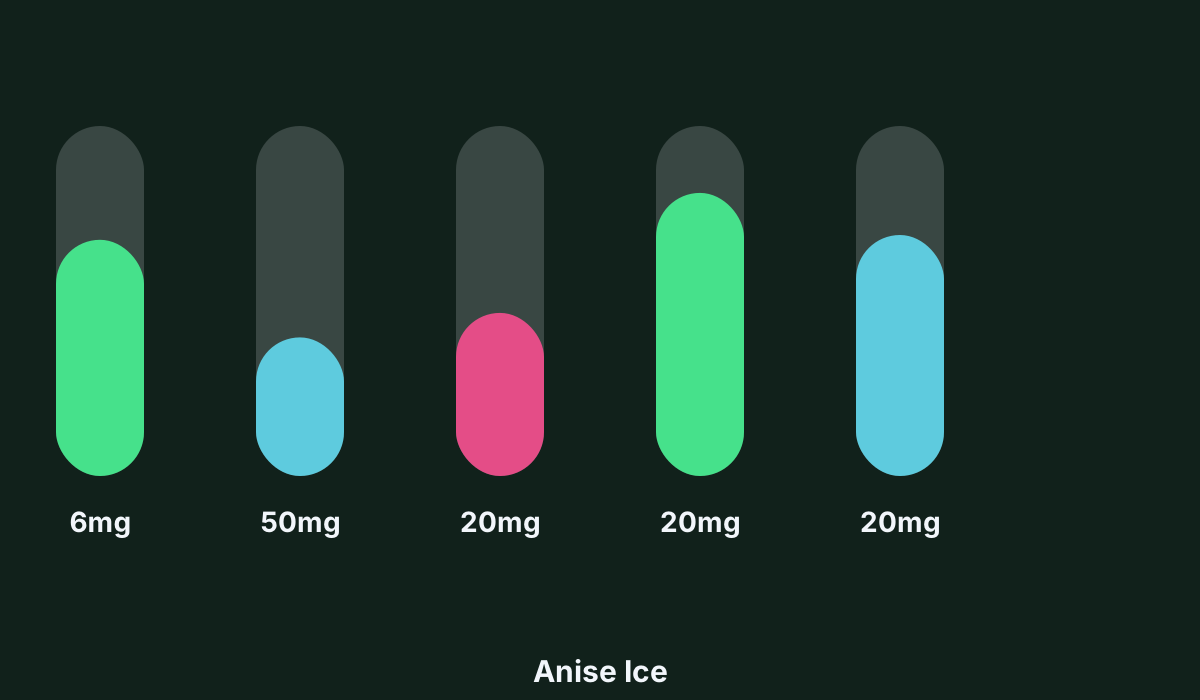
In most cases yes, as long as each strength meets the minimum run length. Mixed strength cartons are popular with retailers building their first display because they show the full ladder without over committing.
What does a sample pack usually include?
A typical anise ice sample pack covers the strengths or variants you are most likely to list, packed so you can evaluate them side by side. Tell us which lines you are considering and we will match the pack to that rather than sending a generic selection.
What is the usual minimum order for anise ice?
For a standard production run the minimum is normally one master carton per flavour, though mixed cartons can be arranged for a first order. If you are testing the line, ask about a sample pack first and treat the freight as part of your research budget.
What if a batch does not match the sample?
Keep the retained samples from the approval stage. If a delivered batch measurably differs, we compare against the retained set and resolve it against the production record. This is why we insist on sealed retained units from every run.
How long does a anise ice order take to arrive?
Production typically takes ten to eighteen working days after artwork approval, and transit depends on the method you choose. Air express is fastest, sea freight is cheapest at volume. We confirm both at quotation so there is no surprise later.
Next Step
Whether you order from us or elsewhere, keep a retained sample from every batch. It costs almost nothing and it is the single most effective protection available to a anise ice buyer.
Related Reading
- Anise Ice Loyalty Effects in Repeat Categories — Warehouse Teams
- Merchandising Anise Ice Inside a Physical Store — Cross-Border Trade
- Anise Ice First Order Playbook for New Importers — New Distributors
- Anise Ice Barcode and Labelling Requirements — Online Sellers
- Sustainability and Take Back Programmes for Anise Ice — Private Label Programmes
- Merchandising Anise Ice Inside a Physical Store — North America